 The Village Journal
Postpartum Mood Disorders: What They Are and What to Watch For
Postpartum mood disorders are the most common complication of childbirth — yet half of moms never get diagnosed. Here’s what each condition looks like, and what to do.
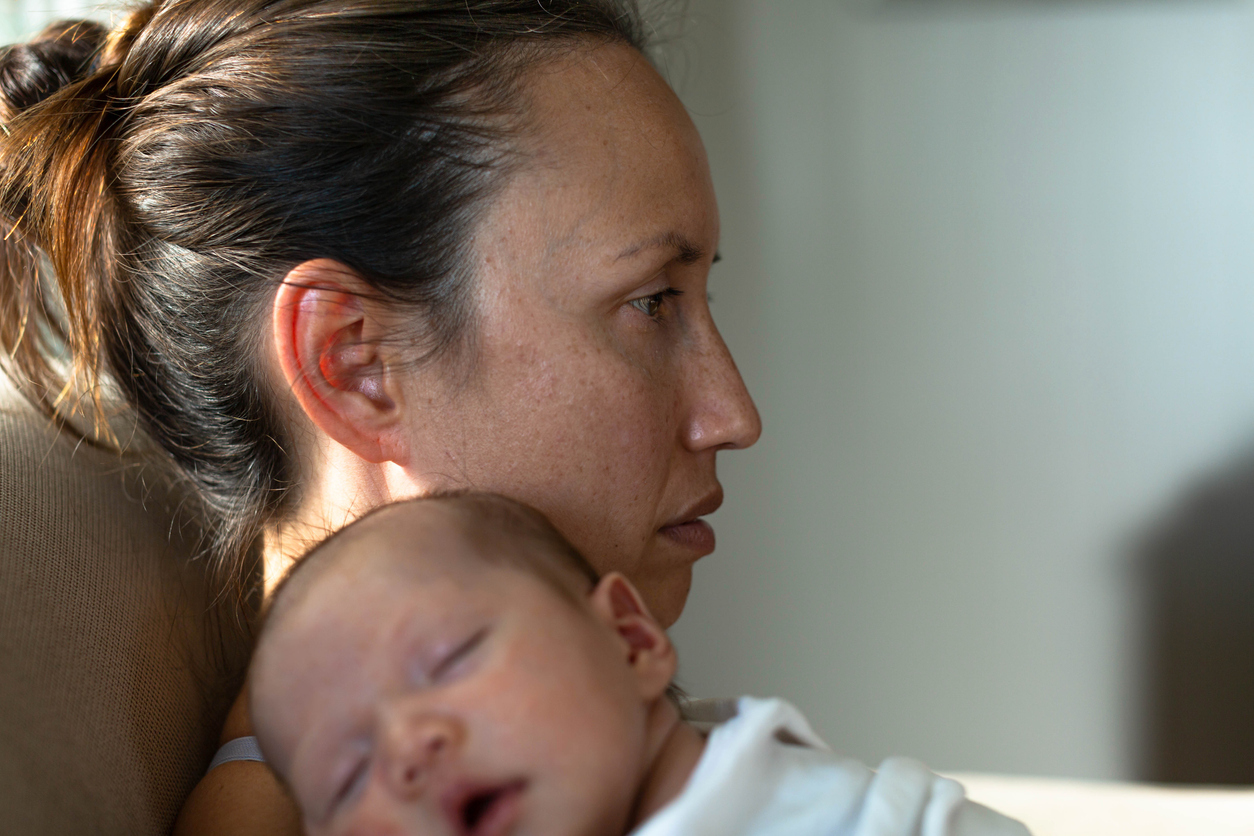
If you’re in the postpartum period and something feels off, this might be the most important thing you read today.
Not because it’s going to scare you. But because so much of what new moms experience goes unnamed, unexplained, and unsupported. And when you don’t have a name for what you’re going through, it’s easy to assume something is wrong with you.
There isn’t. What you’re feeling has a name. And you’re not alone in it.
Postpartum mood disorders are the most common complication of childbirth — affecting up to 1 in 5 new moms. And yet only about half of those women ever get diagnosed or treated. The gap between how many women are struggling and how many are getting help is one of the things we think about most at VillageFor.
Here’s what you need to know.
What is a postpartum mood disorder?
“Postpartum mood disorder” is an umbrella term for several different conditions that can affect your mental health during and after pregnancy. They’re not all the same. They don’t all look the same. And they don’t all require the same kind of support.
- Baby blues. This is the most common experience — affecting up to 80% of new moms. You might feel weepy, irritable, or emotionally all over the place in the first few days after birth. Baby blues typically resolve on their own within one to two weeks. They’re real, they’re hard, and they’re also temporary.
- Postpartum depression (PPD). When what you’re feeling doesn’t lift after two weeks — or gets heavier — that’s when it moves into postpartum depression territory. PPD affects about 1 in 5 new mothers in the U.S. and looks different from what most people expect. It’s not always crying. It can show up as numbness, rage, disconnection, or a quiet sense that you’ve lost yourself.
- Postpartum anxiety (PPA). Often overlooked because it doesn’t have the same name recognition as PPD, postpartum anxiety is just as common — and just as real. It includes racing thoughts, constant worry, intrusive thoughts postpartum about your baby’s safety, and physical symptoms like a tight chest or a racing heart. Read more about the specific postpartum anxiety symptoms to watch for — PPA and PPD often show up together.
- Postpartum psychosis. This is rare — affecting 1 to 2 out of every 1,000 births — but it’s serious. Postpartum psychosis includes hallucinations, delusions, severe confusion, and behavior that feels completely out of character. It requires immediate medical attention. If you or someone you know is experiencing this, please reach out now.
Signs to pay attention to
The hard part about postpartum mood disorders is that they’re easy to explain away. It’s just exhaustion. It’s the adjustment. Other moms handle this.
But there’s a difference between the hard normal of new motherhood and a mood disorder that needs support.
- Postpartum depression. Persistent sadness or emptiness that doesn’t lift, difficulty feeling connected to your baby, rage or irritability that feels out of proportion, or a quiet sense that you’ve lost yourself and wonder if you’ll ever feel like you again.
- Postpartum anxiety. It tends to feel like you can’t turn your brain off. Constant “what ifs.” Intrusive thoughts about something terrible happening to your baby. An underlying dread that something is about to go wrong, even when everything looks fine.
- Postpartum psychosis. Symptoms can escalate quickly — confusion, paranoia, seeing or hearing things that aren’t there, feeling detached from reality. This is a medical emergency.
If you’re reading this and something is resonating, that matters. You don’t need to be at your worst to deserve support.
Why so many moms go without help
The numbers are hard to sit with. Postpartum mood disorders are the leading complication of childbirth. Up to 15% of women experience peripartum depression, according to the American Psychiatric Association, and 80% of women with a history of depression will experience a recurrence during the perinatal period if untreated. And yet about half of the women affected never get diagnosed or treated.
A lot of that comes down to stigma. The pressure to look like you’re handling it. The fear that admitting something is wrong means you’re a bad mom. The worry that saying it out loud will have consequences.
These are medical conditions. Not character flaws. Not failures. And the longer they go unaddressed, the harder they tend to get.
If something has felt off, that question you’ve been quietly asking yourself is worth paying attention to.
What to do next
You don’t have to figure out exactly what’s wrong before you reach out. You just have to start somewhere.
Talk to your OB, midwife, or a therapist. Be honest — not the polished version of honest, the real version. Organizations like Postpartum Support International offer free helplines, local support groups, and connections to trained providers. And if finding an appointment feels like too much right now, the VillageFor app is built specifically for this — something you can access at 2am, in the middle of the hard moments, when you’re not ready to call anyone yet.
You don’t have to be at your worst to deserve support. You just have to start.
Go deeper
How to know if you have postpartum depression→Postpartum anxiety: the complete guide for new moms→Postpartum anxiety symptoms no one talks about→Intrusive thoughts postpartum→Common questions about postpartum mood disorders
What is a postpartum mood disorder?
Postpartum mood disorder is an umbrella term for several conditions that can affect a new mom’s mental health after giving birth — including baby blues, postpartum depression, postpartum anxiety, and postpartum psychosis. They vary in severity and symptoms, but all are treatable with the right support.
How common are postpartum mood disorders?
More common than most people realize. Baby blues affect up to 80% of new moms. Postpartum depression affects about 1 in 5 new mothers in the U.S. Postpartum anxiety is equally common and often goes undiagnosed. These are not rare experiences — they’re the leading complication of childbirth.
What’s the difference between baby blues and postpartum depression?
Baby blues typically start within the first few days after birth and clear up within one to two weeks. Postpartum depression lasts longer, feels more intense, and interferes with your ability to function or feel like yourself. If symptoms persist beyond two weeks, it’s worth talking to a provider.
Can postpartum mood disorders be treated?
Yes. With the right support — which might include therapy, medication, peer support, or some combination — most women see significant improvement. The key is not waiting until things feel unbearable to reach out.
What should I do if I think I have a postpartum mood disorder?
Start by telling someone the truth — a partner, a friend, or a provider. Organizations like Postpartum Support International offer free helplines and trained providers. Your OB or midwife can also point you toward the right support. You don’t need to have everything figured out before you reach out.
If this is an emergency
If you feel like you might hurt yourself or your baby, please reach out right now. You are not alone, and you are not a bad mom for feeling this way. Help is available around the clock.