Every pediatric visit starts with the same questions. How many ounces? How many wet diapers? Is the baby gaining?
Nobody writes down how many times you cried during the 2 a.m. feed. Or that you dread the sound of the pump. Or that you hid the formula canister when your mother-in-law came over.
Feeding gets measured in ounces, minutes and percentiles. The woman doing the feeding mostly gets measured in whether she says she’s fine.
And feeding isn’t one decision you make once. It’s eight to twelve times a day, every day, often for months. Each one is a small test you didn’t sign up for: Is it enough? Is it the right way? Why does this feel so hard and complicated?
That’s why we’re partnering with Comotomo. What brought us together wasn’t the bottle. It was a shared belief that the person holding it matters just as much as what’s in it.
The part of feeding nobody sees
Feeding a baby carries a mental load that goes way beyond how much your baby is eating. It’s everything around it, and most of it lives in your head.
It’s keeping track of when the last feed started, how long it lasted, which side, and whether it counted as a real feed or more of a snack. It’s doing math at 3 a.m. Thirty milliliters is about an ounce. She took two and a half ounces at 11, so if she wakes at 2 she’s probably hungry, but if she wakes at 1, is it gas? You check the tracking app, then the handout from the pediatrician, then you search it anyway.
It’s the bottle aisle, a wall of options that all promise less gas and less fussing, and a baby who refuses the first two you bring home. It’s figuring out nipple sizes, and whether the flow is too fast because she’s sputtering or too slow because she’s frustrated.
It’s the formula aisle. Standard, gentle, sensitive, hypoallergenic, organic. Reading ingredient labels on your phone in the store. Worrying that switching brands will upset her stomach, and worrying that not switching means this one is the reason she’s fussy. Wondering whether you can keep affording the one the pediatrician suggested.
It’s pump parts. Flanges, valves, membranes, bottles, and a drying rack that’s never empty. Washing the same pieces after every session. Buying a second set so you can sleep instead of scrub. Packing the pump bag for work, finding somewhere to pump that isn’t a bathroom, labeling bags with the date, and searching how long breast milk lasts in the fridge for the fifth time.
It’s the planning. Who’s doing the night feed. Whether there’s enough in the freezer before you go back to work. Whether there’s enough formula in the house to get through the weekend.
No one hands you this list. It just becomes yours. And because it’s invisible, the people around you may not see how much you’re carrying until you fall apart over something small, like an empty can or a missing valve. That isn’t overreacting. That’s what happens when one person holds the whole system in her head.
The night the plan changes
It usually isn’t a big, clear moment. It’s 3 a.m. and your baby has been nursing for forty minutes and is still hungry. You’ve been pumping between feeds for weeks to get one more ounce. The lactation consultant said to give it another week. Someone in your family has mentioned, more than once, that they breastfed without any trouble.
There’s a can of formula in the cabinet that you bought “just in case.”
You make the bottle. Your baby drinks it fast and falls asleep on your chest, full and heavy. And you sit there in the dark and cry, because you’re relieved and heartbroken at the same time, and you aren’t sure which one you’re allowed to feel. You’re allowed to feel both.
What makes that night so hard usually isn’t the formula. It’s what you tell yourself about it. My body couldn’t do this. I gave up. A better mom would have kept going. None of that is true, and it can follow you for months. A large UK study found that among moms who weren’t depressed during pregnancy, the ones who planned to breastfeed and didn’t had the highest risk of postpartum depression. The bottle didn’t cause that. The weight women are taught to put on it did.
It isn’t only the switch
Some women breastfeed for a year and dread every feed. You’re the only one who can do nights. You can’t be away for more than a couple of hours. By dinner you’re so touched out you flinch when someone reaches for you, and then you feel guilty for it.
Some women feel a wave of sadness or dread right as their milk lets down, and it passes a few minutes later. That has a name, D-MER, and it’s worth telling your provider about. It doesn’t mean anything about how much you love your baby.
If you’re exclusively pumping, you may be feeding your baby without the closeness everyone promised, sitting in the next room hooked up to a machine while someone else gives the bottle.
If you’re formula feeding, you might be tired of explaining. Maybe it was supply, a medication, a NICU stay, adoption, going back to work, or something in your history that made breastfeeding the wrong fit for you. Maybe you just didn’t want to. You don’t owe anyone the reason, even when it feels like everyone is waiting for one.
And if you’re doing a bit of everything, you may feel judged from both directions at once.
Every one of these women is feeding her baby. Most of them are asked how the baby is eating. Far fewer are asked how she’s doing.
What actually helps
In a study of new moms in Calgary, close to 9 in 10 had real trouble breastfeeding. Struggling didn’t decide their risk of postpartum depression. How they were treated while they struggled did. The moms who felt supported did much better than the moms who felt judged or brushed off.
Support doesn’t have to be complicated. Ask how feeding is going. Then ask how she’s doing, and wait for a real answer. Take the night bottle without being asked. Own a piece of the system completely, like the pump parts, the formula supply or the bottle washing, so she doesn’t have to track it. Let her say “I switched to formula and I’m sad about it” without rushing to fix it.
That’s the heart of Ask Her Twice, the campaign we’re running with Comotomo. Ask how feeding is going. Then ask how she’s doing.
Why Comotomo
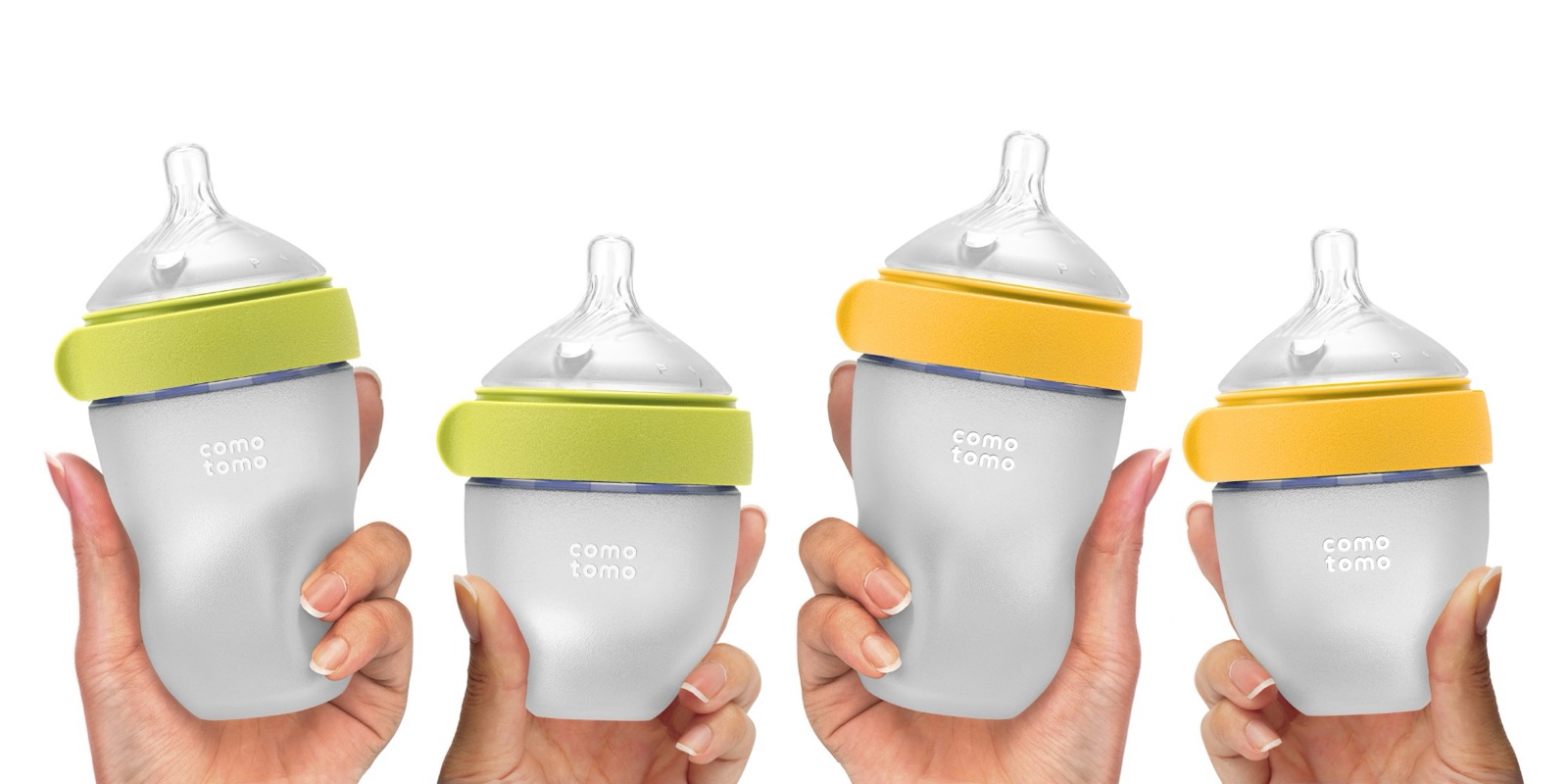
Comotomo was started in 2009 by a designer who watched a colleague feed her baby with a traditional long-neck bottle and wondered why baby bottles hadn’t changed with the times. They went back to the beginning and asked whether bottles were really designed with the baby in mind.
We built VillageFor because we needed support after our own babies were born and couldn’t find it. When Cait reached out to Comotomo this summer, it was personal. Their bottles had fed all three of her babies, and she knew how heavy a feeding decision can feel for a mom.
Their team wrote back that they believe a mother’s physical and emotional well-being is just as important as caring for her baby. We believe a thriving baby starts with a thriving mother, and they told us that’s something they think about a great deal on their side too.
One early Comotomo customer called it “a bottle of freedom.” Anyone who has handed a bottle to someone else so she could finally sleep knows what they meant. A bottle is never only about milk. It’s about whether the person holding it is getting any rest, any help, any room to breathe. That’s the part we want to take care of together.
What the partnership includes
20% off Comotomo, for our Village
VillageFor members get 20% off eligible Comotomo products on Amazon. Use code COMOVILLAGE at checkout. Offer valid through December 31, 2026. Restrictions and eligibility may apply.
Three free months of Village Plus for Comotomo customers
Eligible Comotomo customers get three months of Village Plus at no cost. You won’t be charged automatically when the free months end. If you want to keep Village Plus after that, you choose it. If not, you keep the free version of VillageFor, and your check-ins and history stay with you. Use promo code VILLAGEPLUS6 when redeeming the offer.
Inside VillageFor you can check in on your mood in a couple of minutes and see how it changes over time. You can take the EPDS-US, a postpartum depression screening, so you aren’t left guessing. On nights you don’t have the words, you can talk it out in Voice Journal. You can bring the people you trust into your Village and tell them exactly what you need, including the pieces of the feeding load you want someone else to own. And there’s guided support for feeding anxiety, mom guilt and being touched out.
The person behind the bottle
Breast, bottle, pump, formula, donor milk, all of the above. However you’re feeding your baby, you’re doing something hard, over and over, often on almost no sleep.
So the next time someone asks how feeding is going, we hope they ask a second question too.
How are you doing?
That’s what this partnership is about. Comotomo is making sure the bottle works for the baby. We’re making sure someone’s checking on the person holding it.
Questions moms ask about feeding and mental health
Why is feeding my baby so stressful?
Because it never really stops, and so much of it is invisible work: tracking, planning, washing, deciding. Add the pressure to do it the “right” way and you’re carrying a lot more than a bottle. Feeling stressed by it doesn’t mean you’re doing it wrong.
Is it normal to feel sad about stopping breastfeeding?
Yes. A lot of women feel grief and relief at the same time, sometimes in the same hour. If the sadness hangs on for weeks or starts to color everything else, bring it up with your provider.
Why do I feel so guilty about formula feeding?
Most of what you hear about feeding points to one “right” answer, so anything else can feel like failing. Research on formula-feeding moms found guilt and stigma are common. Your baby being fed is the point. How you get there is your call.
Can breastfeeding problems cause postpartum depression?
They’re linked, especially when the support around them feels judgmental or dismissive. Good support makes a real difference. If feeding is wearing you down, take it seriously instead of pushing through.
Is it okay to stop breastfeeding for my mental health?
Yes. Your mental health is a real reason. Talk with your OB, midwife, pediatrician or a lactation consultant if you want help planning the change, and with a mental health provider if you’re also feeling low or not like yourself.
Why do I feel dread when my milk lets down?
It may be D-MER, a wave of sadness or dread tied to let-down that usually passes within minutes. It’s different from postpartum depression. Mention it to your provider, ideally one who knows breastfeeding well.
Why do I feel touched out all the time?
When someone needs your body around the clock, it’s common to hit a point where any more touch feels like too much. It doesn’t mean you love your baby or your people any less. It usually means you need a break that’s actually yours.
How do I know if it’s more than feeding stress?
Pay attention if the sadness, worry, anger or numbness is there most days, follows you outside of feeds, or keeps you awake even when you finally have the chance to sleep. Bring it to your OB, midwife or pediatrician, or take the screening in VillageFor and bring your results with you.
If you need help right now
If you’re having thoughts of harming yourself or your baby, call or text the National Maternal Mental Health Hotline, call or text 988, or call 911. Those thoughts are a reason to reach out right now.
Christy & Cait